 EN
EN


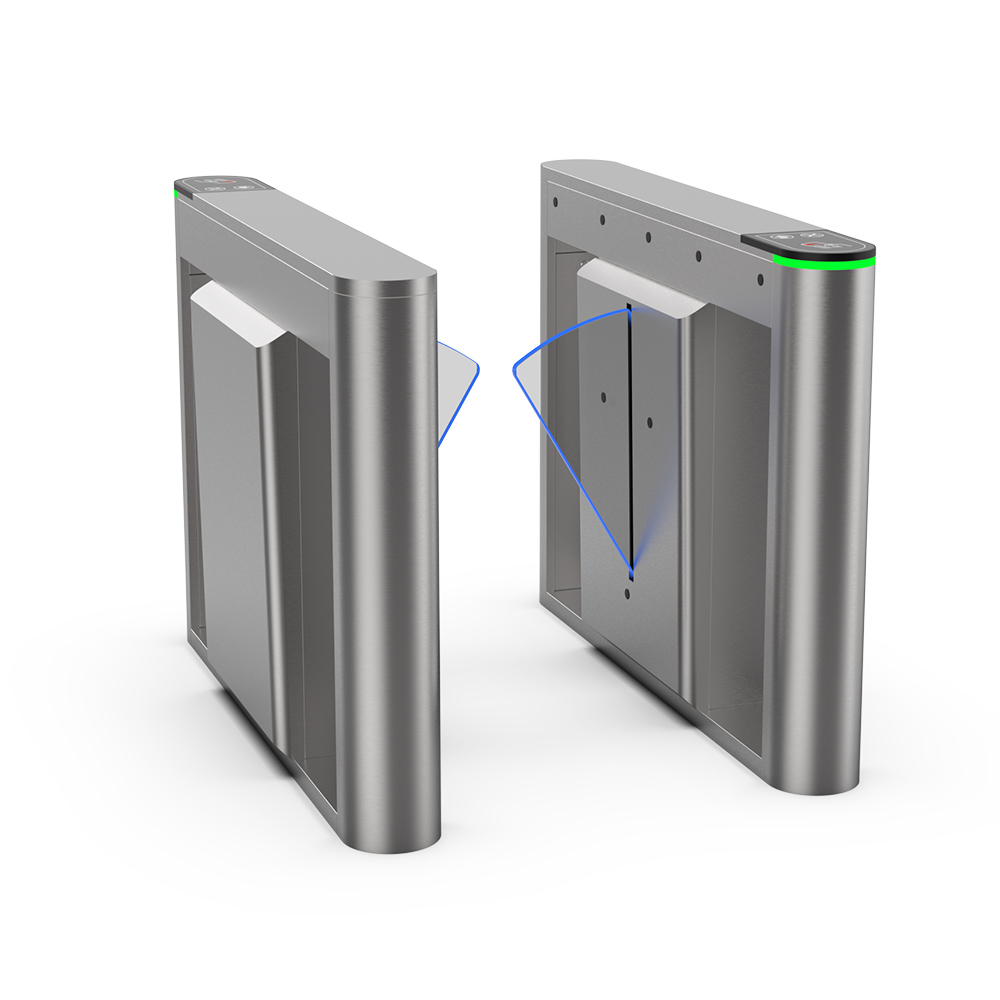


Supermarket entrance gates are used to guide customer movement, separate entry and exit routes, accommodate shopping carts and support a store’s wider access management plan. The three most common options are automatic swing gates, one-way entrance gates and speed gates, but they serve different purposes.
An automatic swing gate is usually the most flexible choice for public supermarket entrances because it can provide a wider passage for customers, wheelchairs, strollers, carts and luggage. A one-way gate is suitable when the main objective is to guide customers in one direction and discourage entry through an exit lane. A speed gate provides more advanced access authorization and pedestrian detection, making it more appropriate for staff entrances, membership-controlled areas or restricted internal zones than for a standard public grocery store entrance.
The right solution depends on customer volume, passage width, cart movement, emergency egress, accessibility, store layout, control method and required system integration. This guide compares the three gate types and explains how to plan a practical supermarket entrance.
Supermarket Entrance Gates: Quick Comparison
| Comparison Factor | Automatic Swing Gate | One-Way Gate | Speed Gate |
|---|---|---|---|
| Primary Function | Controlled public passage with flexible lane width | Directional customer-flow control | Credential-based pedestrian access control |
| Typical Users | Customers, wheelchair users, families and cart users | Customers entering or leaving through a designated route | Employees, contractors, members or authorized visitors |
| Shopping Cart Access | Suitable when the lane and detection system are configured correctly | Suitable with an adequately sized opening | Usually not the first choice for carts unless specifically designed for them |
| Access Credential Required | Optional | Usually no | Normally yes |
| Direction Control | One-way or two-way operation | Primarily one-way | One-way or two-way authorization |
| Pedestrian Detection | Basic to advanced, depending on model | Mechanical or sensor-based | Normally uses multiple optical or infrared sensors |
| Installation Complexity | Low to medium | Low to medium | Medium to high |
| Typical Location | Main entrance, checkout exit and accessible lane | Customer entrance, checkout exit or cart-control route | Staff entrance, office, warehouse or restricted zone |
| Relative Project Cost | Depends on width, motor, sensors and controls | Often simpler, but varies by automation level | Usually higher because of sensors and access control integration |
These are general comparisons. The final performance and suitability of a gate depend on the selected model, passage layout, sensor configuration, emergency mode and store operating procedures.
What Should a Supermarket Entrance Gate Accomplish?
A supermarket gate should not be selected only by appearance or cabinet price. It needs to support the complete movement of customers, carts, employees and emergency traffic through the store.
A well-planned system may need to:
Guide customers from the entrance toward the sales floor
Separate incoming and outgoing pedestrian traffic
Reduce customers entering through checkout-only lanes
Allow wheelchairs, strollers, carts and bulky purchases to pass
Support high customer volume during peak shopping periods
Provide safe passage for children and elderly customers
Open or release during an emergency
Integrate with staff controls, sensors or visitor systems
Coordinate with CCTV, electronic article surveillance and store security procedures
Remain easy for employees to monitor and maintain
The public entrance, checkout exit, employee entrance and warehouse access point may require different gate types. A single product does not necessarily need to control every route in the store.
What Is a Supermarket Swing Gate?
A supermarket swing gate uses one or two panels that rotate around a vertical pivot. The gate may remain closed until a presence sensor, push button, remote control or access control signal authorizes opening. It may also remain open during normal customer entry and close only when reverse movement or another defined condition is detected.
The main advantage of a swing gate is its flexible passage width. A properly selected model can accommodate ordinary pedestrians as well as wheelchairs, strollers, shopping carts, luggage and larger purchases. The barrier panel can be designed for one-way or two-way movement, depending on the supermarket layout.
Automatic swing gates can also include:
Pedestrian or approach sensors
Anti-pinch detection
Reverse-passage alarms
Direction indicators
Remote opening controls
Fire alarm or emergency release interfaces
RFID, QR code or staff access readers
Adjustable opening and closing speed
Review DOOR’s automatic swing gate systems for supermarket entrances, accessible lanes, commercial buildings and other wide-passage applications.
Advantages of Swing Gates for Supermarkets
Passage width can be selected around customers and carts
One-way and bidirectional operation are possible
The gate can be integrated with sensors or staff controls
A wide lane can support accessible entrance planning
Different cabinet and panel styles are available
The same general gate type can be used at entrances and checkout areas
Limitations of Swing Gates
The panel requires sufficient movement clearance
Poor sensor positioning may create false triggers
Wide or heavy panels may open more slowly
A basic swing gate does not automatically prevent tailgating
Cart movement must be considered when setting the closing logic
The lane must still comply with applicable accessibility and egress requirements
What Is a One-Way Supermarket Gate?
A one-way gate allows customers to move in the intended direction while discouraging or preventing passage in the opposite direction. It is often installed between a supermarket lobby and sales floor, beside checkout lanes or at an exit where the store wants to guide traffic toward a particular route.
“One-way gate” describes the traffic-control function rather than one single mechanical structure. The gate may be:
A mechanical push gate
A spring-return swing gate
A motorized automatic swing gate
A sensor-controlled entrance gate
A checkout gate operated by store personnel
A directional gate integrated with an alarm
A simple mechanical one-way gate can be appropriate for a low-complexity entrance where the store only needs directional guidance. A motorized version is more suitable when the store requires automatic opening, controlled reverse movement, remote release or safety sensors.
Advantages of One-Way Gates
Simple customer-flow guidance
Can discourage entry through checkout exits
May require fewer access control components
Suitable for entrances that do not require customer identification
Mechanical and automated configurations are available
Can be combined with signs, railings and queuing barriers
Limitations of One-Way Gates
A simple gate may not reliably detect reverse passage
It does not verify customer identity
It should not be treated as a complete loss-prevention system
Mechanical push gates may be difficult for some customers to operate
Emergency release and accessible passage still need to be planned
Wide carts may require a separate or specially sized lane
What Is a Speed Gate?
A speed gate is an optical pedestrian access gate with motor-driven panels and multiple infrared or optical sensors. The user normally presents an authorized credential, after which the gate opens and monitors movement through the lane.
Credentials may include:
Employee RFID cards
QR codes
Mobile credentials
Facial recognition
Fingerprint verification
Temporary visitor passes
Speed gates provide more advanced pedestrian detection and access authorization than a basic supermarket one-way gate. However, their standard use case is normally a controlled employee or member entrance rather than unrestricted public access with shopping carts.
DOOR’s speed gate turnstiles can be considered for supermarket offices, employee entrances, warehouse access points and other areas where users must present an approved credential.
Advantages of Speed Gates
Supports credential-based access control
Provides optical pedestrian monitoring
Can detect selected abnormal passage events
Suitable for staff and restricted-zone management
Can integrate with attendance and visitor systems
Provides a modern enclosed entrance design
Limitations of Speed Gates in Public Supermarket Areas
Customers may not have access credentials
Shopping carts and large purchases complicate sensor logic
Young children may walk close beside an adult
The system may be unnecessarily complex for a public entry lane
Installation and maintenance costs are usually higher
Accessible and cart lanes require suitable dimensions and testing
Swing Gate vs One-Way Gate vs Speed Gate
Customer Flow
A one-way gate is focused primarily on direction. A swing gate offers more flexibility because it can operate in one or two directions and can be controlled by sensors, staff or access devices. A speed gate is designed around authorization and pedestrian detection rather than unrestricted customer flow.
Shopping Cart Passage
Public supermarket entrances frequently need to accommodate nesting carts, individual shopping carts, baby strollers and customers carrying large purchases. A swing gate or wide one-way gate is normally easier to configure for this movement.
A speed gate may be able to support a wider lane, but its sensor logic must distinguish between the authorized person, cart, child and other objects moving through the detection zone. It should not be specified for cart traffic without model-specific testing.
Reverse Movement Control
A basic mechanical one-way gate relies mainly on physical resistance and customer compliance. A motorized swing gate can use sensors and alarms to respond to reverse movement. A speed gate normally has a more extensive sensor array, but its effectiveness depends on detection zones, control software and correct commissioning.
Access Authorization
Most public supermarket entrances do not require each customer to present a credential. In these cases, a speed gate may add complexity without solving a necessary business requirement.
Credential-based control may be useful for:
Employee entrances
Warehouse and stockroom access
Cash office entrances
Administrative offices
Membership-only areas
After-hours staff access
Installation Space
A swing gate needs clearance for panel movement. A mechanical one-way gate may require a similar swing area, depending on its design. A speed gate uses longer cabinets and requires sufficient lane length for sensor detection and safe closing.
Maintenance
A simple mechanical gate generally has fewer electronic components. An automatic swing gate requires inspection of the motor, pivot, panel alignment and sensors. A speed gate requires additional attention to optical sensors, control boards, barrier synchronization and access control devices.
Recommended Gate Type for Each Supermarket Area
| Supermarket Area | Recommended Gate Type | Main Reason |
|---|---|---|
| Main Customer Entrance | Automatic swing gate or one-way gate | Supports unrestricted customer entry and directional flow |
| Accessible Customer Entrance | Appropriately configured wide swing gate or accessible door | Provides space for wheelchairs, strollers and mobility devices |
| Shopping Cart Entrance | Wide swing gate or one-way gate | Accommodates carts and customers moving together |
| Checkout Exit | One-way gate or staff-controlled swing gate | Guides customers out while discouraging entry through checkout lanes |
| Employee Entrance | Speed gate or access-controlled swing gate | Supports cards, QR codes, biometrics or attendance systems |
| Warehouse or Stockroom | Access-controlled swing gate or speed gate | Restricts access to authorized employees |
| Membership-Controlled Area | Speed gate or scanner-controlled swing gate | Allows credential verification before entry |
| Emergency Exit Route | Code-compliant exit door or approved release configuration | Must support safe evacuation according to local requirements |
Best Layout for a Public Supermarket Entrance
For many supermarkets, the most practical design is not a single gate but a mixed entrance arrangement.
Example Public Entrance Configuration
One or more automatic swing gates for standard customer entry
A wider accessible route for wheelchairs, strollers and large carts
Railings or barriers to guide customers toward the sales floor
Presence sensors positioned around the expected walking route
A remote control or staff release point
Emergency opening connected to the approved safety system
Clear signs showing the permitted direction of travel
Example Checkout Exit Configuration
A one-way or staff-controlled swing gate
Sufficient width for carts and purchases
Clear separation between checkout and incoming traffic
Coordination with electronic article surveillance equipment
Visibility from checkout or security personnel
An approved emergency release or adjacent exit route
Example Staff Entrance Configuration
A speed gate or access-controlled swing gate
RFID card, QR code or biometric reader
Integration with attendance or access control software
Separate handling for deliveries and large equipment
Emergency release and manual override
Shopping Carts, Strollers and Family Groups
Supermarket entrance systems operate differently from ordinary office turnstiles because customers frequently move through the lane with other people or objects.
The gate must account for:
One customer pushing a cart
An adult walking beside a child
Parents with strollers
Customers using mobility aids
Customers carrying baskets or large products
Multiple customers entering close together
Empty cart collection and return
Closing logic should not be based only on the time elapsed after opening. Sensors should monitor the actual passage zone, and the system should remain open until the configured movement has cleared the barrier area.
The final setup should be tested using realistic carts, strollers and customer movement patterns before the entrance is placed into service.
Accessibility Considerations
A gate described as “wide” is not automatically an accessible entrance. The entire route—including approach space, clear opening, operating force, controls, floor level and surrounding barriers—must be considered.
In the United States, the ADA Accessibility Standards for accessible routes, doors and gates state that revolving gates and turnstiles must not form part of an accessible route. An appropriate accessible door or gate arrangement should therefore be provided and evaluated against the applicable requirements.
Project teams should confirm:
Required clear passage width
Wheelchair turning and approach space
Position and height of controls
Whether customers must push or pull the gate
Opening and closing speed
Availability of an adjacent accessible route
Whether shopping carts obstruct the accessible lane
Local accessibility requirements outside the United States
Emergency Egress and Power Failure
A supermarket entrance gate must not create an unsafe obstruction during a fire alarm, power failure or emergency evacuation. The required behavior should be defined by the project’s fire, life-safety and building professionals.
Possible configurations include:
Automatic opening after a fire alarm signal
Barrier release when power is removed
UPS-supported controlled operation
Manual release by authorized personnel
A breakaway panel where approved
A separate code-compliant exit door
For U.S. workplaces, OSHA exit-route requirements address matters such as unobstructed exits, sufficient capacity and the ability to open exit-route doors from the inside. Local building and fire codes may impose additional requirements.
Emergency operation should be tested during commissioning and included in the store’s regular inspection schedule.
Can Supermarket Gates Prevent Theft?
A supermarket entrance gate can support customer-flow control and discourage some forms of unintended movement, but it should not be presented as a complete theft-prevention solution.
Retail loss prevention normally involves several coordinated measures, such as:
Electronic article surveillance
CCTV
Store layout and sight lines
Checkout controls
Receipt-checking procedures
Staff training
Alarm and incident response
Inventory and point-of-sale systems
A gate can guide traffic toward monitored exits and make reverse entry more noticeable. However, it cannot verify that every product has been paid for unless it is connected to a wider, specifically designed retail system.
Access Control and System Integration
A standard public supermarket gate may use only a presence sensor or employee-controlled button. More advanced installations may integrate with:
RFID card readers
QR code scanners
Membership applications
Facial recognition terminals
Staff attendance systems
Visitor management platforms
Fire alarm systems
CCTV event recording
Building management systems
Remote monitoring software
The U.S. National Institute of Standards and Technology defines a physical access control system as an electronic system that controls access through authentication and authorization. This type of system is most relevant to employee, warehouse and other restricted supermarket zones rather than an unrestricted public entrance.
Before ordering a gate, provide the supplier with the required interfaces, credential devices, communication protocols and control workflow. Compatibility should be technically reviewed rather than assumed.
Gate Sensors and Safety Functions
The sensor configuration should reflect the intended users and lane layout. A supermarket entrance may need to distinguish pedestrians from carts and detect movement at different heights.
Possible safety and detection functions include:
Approach detection
Presence detection inside the passage
Anti-pinch protection
Reverse-movement detection
Barrier obstruction detection
Adjustable closing delay
Alarm output
Manual or remote opening
Fire alarm input
Sensor quantity alone does not determine system safety. Mounting position, detection range, control logic, panel movement and commissioning are equally important.
What Determines Supermarket Entrance Gate Cost?
The final cost depends on the complete entrance configuration rather than the gate cabinet alone.
Gate Type
A basic mechanical one-way gate normally requires fewer components than a motorized swing gate or optical speed gate. However, custom railings, finishes and installation work can still affect the total price.
Passage Width
A wider panel may require a different motor, cabinet or support structure. Accessible lanes and shopping cart routes should be specified before quotation.
Sensor Configuration
Presence sensors, infrared sensors, safety edges and reverse-passage alarms add functionality and project cost.
Access Control Devices
RFID readers, QR scanners, biometric terminals, controllers and software are usually priced separately from the basic gate.
Customized Appearance
Cabinet material, panel design, branding, finish, indicator lights and integration with store fixtures can affect pricing.
Installation
Installation may include foundations, floor drilling, conduits, electrical wiring, network cabling, railings, signs and commissioning.
Order Quantity
A retail chain ordering gates for multiple stores may require standardized dimensions, packaging, spare parts and installation documentation. Project pricing should be based on the complete rollout plan.
Maintenance and Support
Buyers should consider spare motors, sensors, control boards, remote controls, technical support and future replacement lead times.
How to Choose the Right Supermarket Gate
1. Define the Location
Clarify whether the gate will be installed at the main customer entrance, checkout exit, employee entrance, stockroom or membership-controlled area.
2. Identify the Users
List customers, staff, wheelchair users, children, families, delivery workers and cart users who will pass through the lane.
3. Measure the Passage
Provide the available installation width, required clear opening, ceiling height and surrounding panel-movement space.
4. Estimate Peak Traffic
Use the busiest shopping period rather than daily average traffic. Consider promotions, weekends, holidays and store-opening hours.
5. Define the Direction
Decide whether the lane should support entry only, exit only, bidirectional passage or a direction that changes according to store operations.
6. Confirm Cart Requirements
Provide cart width, expected customer position and whether multiple carts may enter close together.
7. Select the Control Method
Choose between presence sensors, mechanical push operation, staff push buttons, remote control, RFID, QR codes or biometric authorization.
8. Define Emergency Behavior
Confirm the required fire alarm response, power-failure condition, manual release and alternative exit route.
9. Review Local Requirements
Accessibility, electrical, fire, egress and building requirements vary by country and project. Final approval should come from the relevant local professionals and authorities.
Supermarket Entrance Gate RFQ Checklist
Include the following information when requesting a quotation:
Store type and project location
Main entrance, checkout, staff or warehouse application
Number of required gates
Available installation width
Required clear passage width
Shopping cart dimensions
Expected peak customer traffic
One-way or bidirectional passage
Mechanical or automatic operation
Sensor and anti-pinch requirements
Reverse-passage alarm requirements
Remote control or staff button requirements
RFID, QR or biometric integration
Fire alarm and power-failure operation
Indoor, covered or outdoor environment
Cabinet and panel material
Custom color or branding
Required railings or queuing barriers
Installation and commissioning scope
Spare-parts requirements
Delivery destination and schedule
DOOR Supermarket Entrance Gate Solutions
DOOR provides configurable entrance gates for supermarkets, retail stores, commercial buildings, offices and controlled employee areas.
Automatic Swing Gates
DOOR’s supermarket swing gate systems can be configured for one-way or bidirectional movement, wider passages and integration with compatible sensors or access control devices. Final panel width, sensor arrangement and operating mode should be selected according to the store layout.
Speed Gates for Staff and Restricted Areas
DOOR’s speed gate systems are more suitable for supermarket employees, offices, warehouse checkpoints and other zones requiring credential-based access.
Supermarket Project Experience
Review the existing supermarket swing gate project to see an example of a retail entrance application. Project requirements vary, so the final configuration should be designed around each store’s actual customer route, passage width and operating procedures.
Frequently Asked Questions About Supermarket Entrance Gates
Which gate is best for a supermarket entrance?
An automatic swing gate or one-way gate is usually the most practical choice for a public supermarket entrance. Swing gates offer greater flexibility for wide lanes, wheelchairs, strollers and shopping carts. Speed gates are more suitable for staff or restricted areas requiring access credentials.
What is a one-way supermarket gate?
A one-way supermarket gate allows customers to move in the intended direction while discouraging reverse passage. It may use a mechanical push mechanism, spring-return panel, motorized swing gate or sensor-controlled barrier.
Can shopping carts pass through an automatic swing gate?
Yes, when the passage width, panel movement and sensors are configured for the store’s cart dimensions. The complete lane should be tested with actual carts before use.
Can a speed gate be used at a supermarket entrance?
A speed gate can be used where customers or members present credentials, but it is often unnecessarily complex for an unrestricted public entrance. It is generally more appropriate for employees, offices, warehouses or membership-controlled areas.
Do supermarket entrance gates prevent shoplifting?
A gate can guide customers toward monitored routes and discourage some reverse movement, but it cannot replace CCTV, electronic article surveillance, checkout controls, staff procedures and other loss-prevention measures.
How wide should a supermarket entrance gate be?
The required width depends on local accessibility rules, shopping cart dimensions, wheelchair access, strollers and expected traffic. The project team should specify the required clear opening instead of selecting a gate based only on its overall dimensions.
What happens to the gate during a fire alarm?
The required behavior depends on the approved project design. The gate may open automatically, unlock, use backup power or be bypassed by a separate emergency exit. The final configuration must comply with applicable building and fire requirements.
Can supermarket gates integrate with electronic article surveillance?
The entrance layout can be coordinated with compatible electronic article surveillance equipment, CCTV and alarm systems. Technical compatibility, equipment spacing and the required response should be reviewed by the relevant suppliers and integrator.
Can supermarket swing gates operate in both directions?
Many automatic swing gates can be configured for one-way or bidirectional operation. The permitted direction may be controlled by sensors, staff commands or access control signals, depending on the selected model.
What information is needed for a supermarket gate quotation?
Provide the store layout, gate location, lane quantity, required passage width, cart size, customer traffic, operating direction, control method, sensor requirements, emergency behavior and delivery location.
Choose the Right Entrance Gate for Your Store
An automatic swing gate is generally the most versatile option for a public supermarket entrance because it can support customers, carts and accessible lanes. A one-way gate is suitable when the main purpose is directional traffic control. A speed gate is more appropriate where employees, members or authorized users must present credentials before entering.
The best supermarket layout may combine all three functions: wide swing gates for customers, directional gates at checkout exits and access-controlled gates for employees or restricted areas.
Browse DOOR’s complete pedestrian entrance gate systems, review additional access control project cases, or request a supermarket entrance gate recommendation. Include your store layout, passage width, cart dimensions, traffic volume and control requirements so the team can prepare a suitable configuration.
