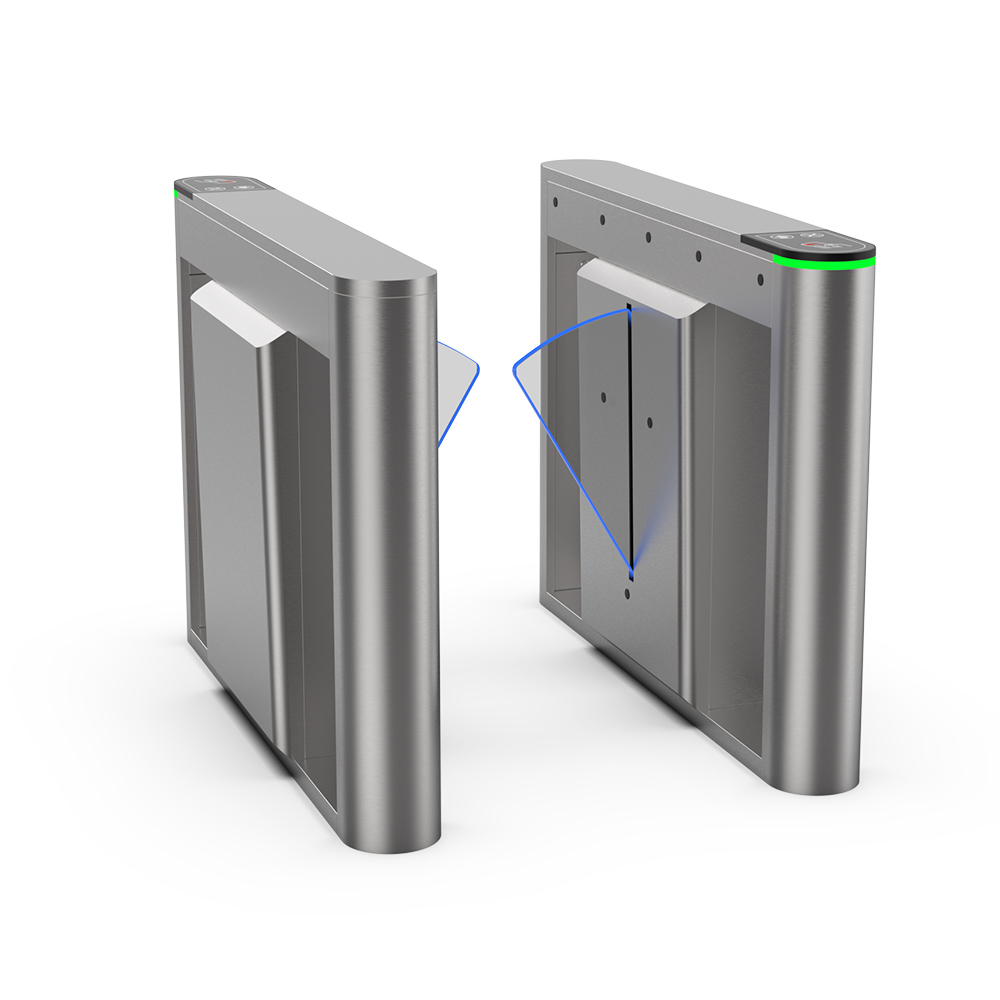
The office lobby is no longer just a passageway; it is the primary touchpoint of your corporate brand, the first experience for employees and visitors, and a critical nexus of security and operations. As workplaces evolve towards flexibility, wellness, and smart technology, the traditional, clunky access gates of the past—the rotating arms and loud barriers—are becoming glaringly obsolete.
Enter the sliding turnstile: a sophisticated access control solution that is rapidly transitioning from a premium option to a standard specification for forward-thinking commercial buildings. This article explores the compelling reasons why this elegant technology is defining the future of office entrance design.
Modern office design prioritizes open, fluid, and valuable floor plans.
The Space-Saving Advantage: Unlike rotating tripods or swing gates that require significant clearance arcs, a sliding turnstile operates within its own slim profile. The doors retract laterally, minimizing the footprint. This liberates precious square footage in the lobby, allowing for more spacious waiting areas, better traffic flow, or impactful architectural features.
Sleek, Unobtrusive Design: With their clean lines and often glass-panel construction, sliding turnstiles embody minimalism. They function as a discreet security layer rather than an imposing industrial barrier, complementing rather than competing with the interior design. This aligns perfectly with the aesthetic demands of Class A offices and corporate headquarters.
The entrance experience sets the tone for the entire workday or visit.
Quiet and Smooth Operation: The servo-driven mechanism of a high-quality sliding turnstile is remarkably quiet (often below 45dB). It eliminates the jarring clunks and buzzes associated with traditional gates, contributing to a calmer, more professional, and focused lobby environment.
Intuitive and Accessible Passage: The sliding motion is natural and easy to navigate. It is inherently more accessible for individuals with luggage, packages, or mobility aids compared to narrow rotating barriers, promoting inclusivity.
Conveying Brand Prestige: The smooth, high-tech operation conveys a message of innovation, efficiency, and care for detail. It tells employees and visitors that they are entering a progressive and well-managed environment.
The modern office is a network of interconnected systems.
The Central Control Point: A sliding turnstile is not a standalone device. It acts as the perfect physical integration point for a suite of smart technologies: facial recognition terminals, mobile credential readers (BLE, QR), visitor management platforms, and elevator dispatch systems.
Data and Efficiency: By connecting to the building's network (TCP/IP), these turnstiles provide real-time data on ingress/egress patterns, enabling optimized facilities management, energy use, and even space utilization analytics. They are a key component of the data-driven, IoT-enabled smart building.
Security must be robust but not disruptive.
Advanced Anti-Tailgating: Modern sliding turnstiles are equipped with multi-zone infrared sensor arrays that can accurately detect and prevent unauthorized "piggybacking" or tailgating attempts—a common weakness in optical sensor-only systems.
Adaptive Security Protocols: They can be programmed for different security levels: free-flow during peak exit times, strict one-person-per-credential mode during standard hours, or locked down after hours.
Emergency Compliance: In the event of a power failure or fire alarm, the doors default to a fail-safe open position, ensuring unimpeded egress and meeting strict life-safety building codes.
Building managers seek solutions that are cost-effective over their lifecycle.
Durability and Low Maintenance: Engineered with premium components like industrial servo motors and hardened glass, a quality sliding turnstile is built for millions of cycles with minimal maintenance. This translates to lower long-term operational costs (OpEx) compared to mechanical gates with higher wear-and-tear.
Future-Proof Modularity: Leading manufacturers design these systems with modular architecture. This allows for easy component replacement, software upgrades, and even the addition of new credential technologies (e.g., a new biometric reader) without replacing the entire unit, protecting the capital investment.
The shift towards sliding turnstiles in office lobbies is not merely a trend in aesthetics; it is a strategic alignment with the core values of the modern workplace: efficiency, experience, intelligence, and sustainability.
They solve multiple challenges simultaneously: they save critical space, create a premium first impression, integrate deeply with smart building infrastructure, provide top-tier security, and offer a superior total cost of ownership.
For developers, architects, and facility managers designing the workplaces of tomorrow, specifying a sliding turnstile system is no longer just an option—it is a fundamental decision to invest in a lobby that works smarter, feels better, and lasts longer.
Is your office lobby ready for the future?
At DOOR, we specialize in engineering sliding turnstile solutions that meet the exacting standards of modern commercial architecture. From initial design consultation to seamless integration with your building systems, we provide the technology and expertise to make your lobby a benchmark for the future.
Contact us today to discuss how a sliding turnstile system can transform your office entrance.


Headquarters Add.
Factory Add.
Come and Contact DOOR
Quick Links
17th Floor, Block C, Digital Innovation Center, Longhua District, Shenzhen, China
 EN
EN