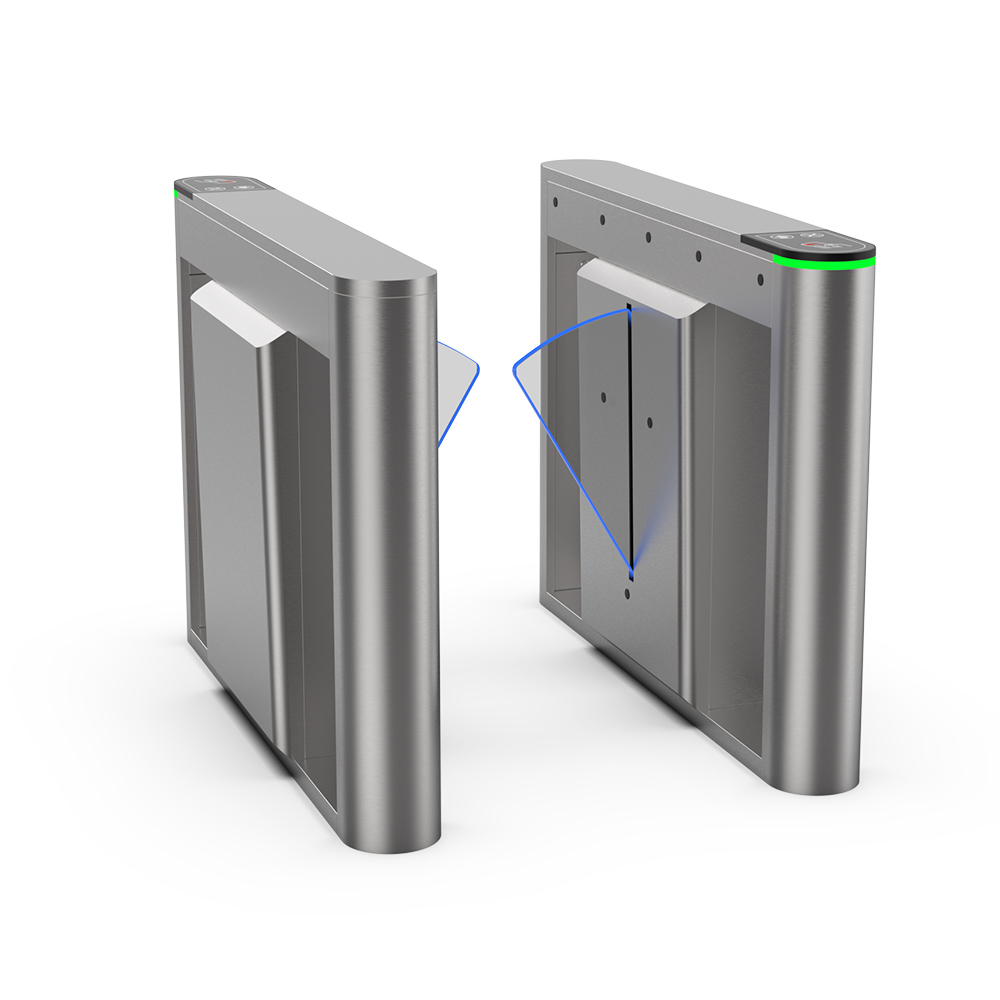
In the realm of physical security for high-risk environments—correctional facilities, data centers, industrial plants, and secured government buildings—controlling the direction of human movement is as crucial as controlling access itself. A fundamental yet often overlooked vulnerability is the security blind spot created by uncontrolled or poorly managed bidirectional passage.
This blind spot allows for "passback" or "tailgating"—enabling an authorized individual to intentionally or unintentionally grant access to an unauthorized person, or allowing someone to exit and re-enter on a single credential. The consequences can range from asset theft to catastrophic breaches.
This guide explores how a dedicated One-Way Turnstile Gate functions as the definitive mechanical and electronic solution to eliminate this vulnerability, establishing absolute, reliable, and enforceable unidirectional traffic control.
A security blind spot in access control is any flaw that allows a breach to go undetected. In pedestrian flow, the primary blind spot is the inability to guarantee that a credential is used for a single, direction-specific passage.
What is Passback? Passback occurs when a valid credential is used to exit a secure area and is then immediately handed back to someone else to enter, or vice versa. In systems without directional logic, this is undetectable.
The Tailgating Link: Passback often relies on or facilitates tailgating (one person following another through an open gate). A system that cannot enforce one-way traffic inherently makes tailgating more profitable and dangerous.
Operational Risks: This vulnerability compromises inventory control (in industrial settings), enables unauthorized exit/entry in detention facilities, and breaks audit trails, making forensic investigation impossible.
A One-Way Turnstile Gate is engineered to permit rotation in one direction only. This is not just a software rule but a fundamental physical design principle.
Core Operating Principles:
Mechanical Unidirectional Locking: The heart of the system is a robust mechanical mechanism—often a clutch or ratchet assembly—that physically allows the revolving barrier (tripod, waist-high, or full-height) to turn only clockwise or counterclockwise. This makes reverse passage mechanically impossible.
Electronically Synchronized Logic: The mechanical function is governed by an electronic control unit (ECU). The ECU only releases the mechanical lock when it receives a valid "grant access" signal for the correct direction from the access control system (e.g., "Entry" command for the entrance gate).
Sensor-Confirmed Passage: Infrared or optical sensors within the channel confirm that a single person has fully passed through after the lock is released. Only after this sensor confirmation does the system reset, ready for the next authorized cycle. This prevents "half-cycles" that could be exploited.
The Result: A true one-way turnstile creates a physical enforcement of policy. Even if an access control rule is mistakenly programmed, the hardware itself provides a final, fail-safe layer of directional control.
Implementing a one-way solution delivers transformative security and operational advantages:
Eliminates Passback Fraud: The core benefit. It renders the "handback" of credentials useless, as the exit and entry are separate, physically enforced processes.
Creates Definitive Audit Trails: Systems can log not just "access granted," but "directional access granted" (e.g., "John Doe – ENTERED Main Lobby – 09:00 | EXITED Main Lobby – 17:00"). This is critical for compliance and investigations.
Enables Accurate Occupancy Counting: By controlling direction, you can maintain a real-time, accurate count of how many people are inside a secured zone—vital for safety (evacuation counts) and operations.
Strengthens Perimeter Integrity: When used as an Anti-Passback Turnstile at perimeter gates, it ensures that once someone leaves a secure compound, they cannot re-enter without a fresh, authorized credential check at the designated entrance.
Simplifies Security Posture: It removes ambiguity for security personnel and users alike. The flow is clear, predictable, and inherently more secure.
Traffic Flow Analysis: Map all pedestrian pathways in your facility. Identify points where bidirectional flow is unnecessary or high-risk. These are ideal candidates for one-way gates.
System-Wide Integration: Ensure your one-way turnstiles are fully integrated with your access control software. The software must support "anti-passback" modes (Hard, Soft, Timed) and correctly assign entry and exit readers to corresponding turnstiles.
Physical Layout & Signage: Pair turnstiles logically (an Entry unit and a separate Exit unit). Use clear, redundant signage (pictograms, lighting) to direct traffic and prevent user confusion or attempts at forced reversal.
Choosing the Right Type: For maximum security, Full-Height One-Way Turnstiles are recommended as they provide the highest level of physical deterrence and are virtually impossible to circumvent. Waist-high models are suitable for areas with lower physical threat but requiring strict flow logic.
Modern security is about managing behavior and movement, not just credentials. A One-Way Turnstile Gate is the indispensable tool for transitioning from simple "door control" to sophisticated "traffic flow control."
By physically eliminating the possibility of reverse or fraudulent passage, it closes one of the most persistent and dangerous blind spots in physical security architecture. For facilities where the cost of a breach is measured in catastrophic loss, environmental disaster, or national security implications, this level of assured control is not an option—it is a requirement.
Is your facility's flow creating unseen risks?
At DOOR, we specialize in engineering high-security one-way turnstile solutions that provide absolute directional control. Our full-height and waist-high models are built with robust mechanical one-way mechanisms and are designed for seamless integration into the most complex security ecosystems.
Contact us today for a security assessment and learn how to eliminate passback vulnerabilities in your critical access points.


Headquarters Add.
Factory Add.
Come and Contact DOOR
Quick Links
17th Floor, Block C, Digital Innovation Center, Longhua District, Shenzhen, China
 EN
EN