 EN
EN


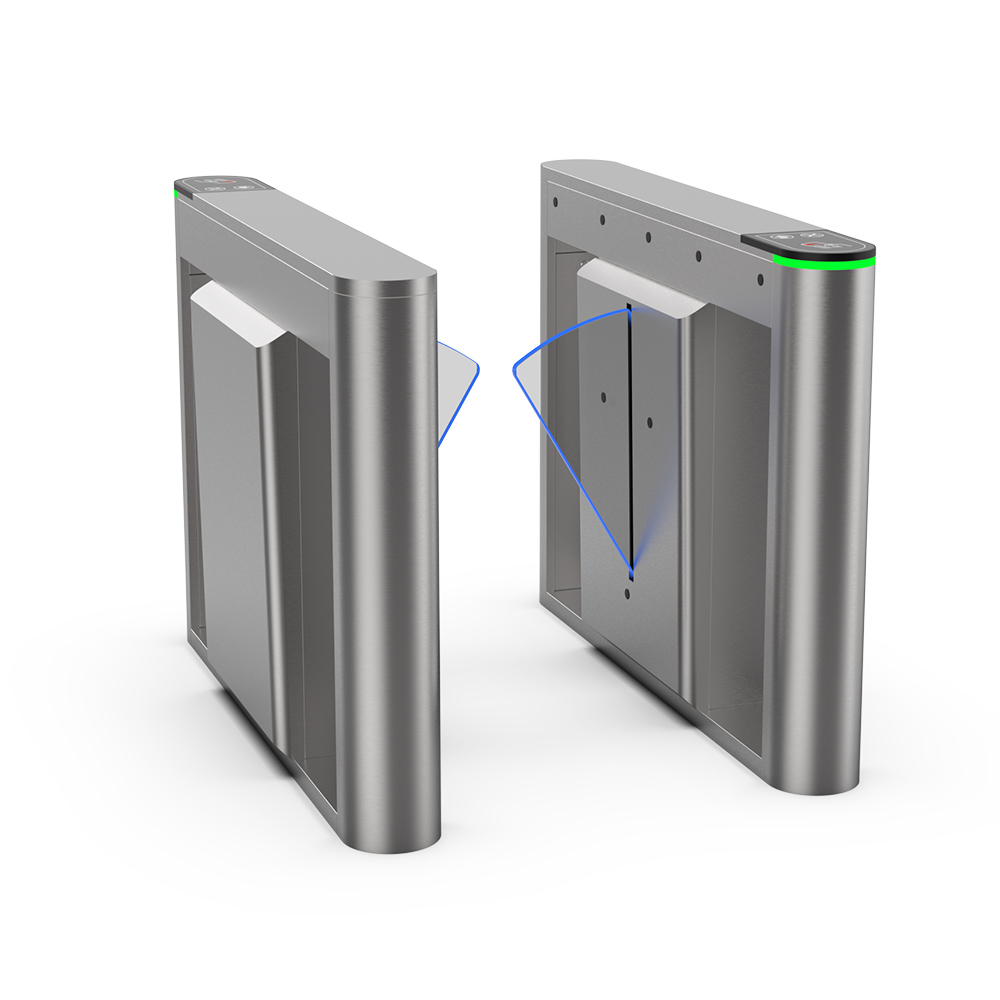


Tripod turnstiles, swing gates, flap barriers, speed gates, sliding turnstiles and full-height turnstiles differ in barrier structure, passage width, pedestrian throughput, security level, installation environment and access control functions. Tripod turnstiles are commonly selected for economical pedestrian control, while swing gates are suitable for wider accessible lanes. Flap barriers and speed gates support faster pedestrian flow, sliding turnstiles combine compact panel movement with a modern enclosed design, and full-height turnstiles provide stronger perimeter control.
The right type of turnstile depends on the project rather than appearance alone. Buyers should evaluate peak traffic, clear passage width, tailgating risk, indoor or outdoor conditions, emergency operation, accessibility requirements, software integration and long-term maintenance before choosing a model.
Quick Comparison of the Main Types of Turnstile Gates
| Turnstile Type | Barrier Structure | Typical Traffic Level | Security Level | Accessible Lane | Common Applications |
|---|---|---|---|---|---|
| Tripod Turnstile | Three rotating arms | Medium | Basic to medium | Usually requires an adjacent gate | Factories, construction sites, offices, schools and leisure facilities |
| Swing Gate | One or two rotating panels | Low to medium | Basic to advanced, depending on sensors | Commonly configured as a wide lane | Hospitals, offices, retail entrances and accessible passages |
| Flap Barrier | Retractable wing-shaped panels | Medium to high | Medium to high | Model-dependent | Metro stations, offices, commercial buildings and transport facilities |
| Speed Gate | Fast swing or retractable panels with optical sensors | High | Medium to high | Wide-lane configurations available | Corporate lobbies, airports, campuses and high-traffic buildings |
| Sliding Turnstile | Panels move horizontally into or alongside the cabinet | Medium to high | Medium to high | Model-dependent | Offices, government facilities, hospitals and residential buildings |
| Full-Height Turnstile | Floor-to-ceiling rotating rotor | Low to medium | High | Separate accessible entrance normally required | Stadiums, industrial plants, construction sites and secure perimeters |
These descriptions are general. Actual throughput, passage width, environmental rating and security performance vary by model, sensor configuration, verification process and system integration.
Turnstiles can be classified in several ways, which is why different manufacturers and security consultants may use slightly different terminology.
By barrier height, turnstiles are commonly divided into waist-height systems, such as tripod turnstiles and many optical gates, and full-height turnstiles designed for stronger perimeter control.
By operating technology, they can also be grouped into mechanical or electromechanical turnstiles and optical turnstiles. Tripod and full-height systems rely primarily on rotating mechanical barriers, while speed gates, flap barriers, sliding gates and many automatic swing gates combine motor-driven barriers with infrared or optical sensors.
Product names may overlap. For example, a speed gate may use swinging or retractable panels, while “optical turnstile” describes the sensing technology rather than one specific barrier shape. For project selection, buyers should therefore compare the actual barrier structure, sensors, passage width and operating specifications instead of relying on the product name alone.
1. Tripod Turnstiles
A tripod turnstile uses three rotating arms positioned around a central mechanism. After a user presents an authorized credential, the mechanism releases and allows one person to push an arm forward and pass through the lane. The arms then return to a controlled position for the next user.
Tripod gates are often selected when a project requires reliable pedestrian counting and controlled one-person passage without the cost or cabinet size of a more complex optical gate. They can usually be integrated with RFID cards, QR code readers, ticketing equipment, fingerprint devices and facial recognition terminals.
The main advantages are a compact structure, straightforward operation and suitability for frequent pedestrian use. Certain models can be configured with an automatic drop-arm function so the passage becomes less obstructed after a power failure or emergency signal. However, a tripod turnstile does not normally provide a suitable wheelchair, luggage or trolley passage. A separate accessible lane should therefore be planned where required.
Explore DOOR’s tripod turnstile gates for factories, offices, construction sites, institutions and other controlled entrances.
Tripod Turnstiles Are Commonly Used For:
Construction site worker attendance
Factory and warehouse entrances
Office employee access
School and campus access control
Swimming pools and leisure facilities
Ticketed attractions and visitor entrances
2. Swing Gate Turnstiles
A swing gate uses one or two barrier panels that rotate around a vertical pivot. The panels open after authorization and return to the closed position once the user has passed. Depending on the selected panel width and cabinet arrangement, a swing gate can create either a standard pedestrian lane or a wider passage for wheelchairs, luggage, carts and equipment.
This flexibility is one of the main reasons swing gates are frequently installed beside tripod turnstiles, flap barriers or speed gates. A mixed-lane arrangement can provide standard controlled lanes for most users and a wider lane for visitors with mobility needs or oversized items.
Swing gates can be equipped with access control readers, direction indicators, safety sensors and anti-pinch functions. However, the security level depends heavily on panel height, sensor coverage, control logic and the surrounding entrance design. A basic waist-height swing gate should not automatically be treated as a high-security anti-tailgating system.
Review DOOR’s automatic swing gate systems to compare cabinet structures, passage configurations and integration options.
Swing Gates Are Commonly Used For:
Accessible pedestrian lanes
Hospitals and healthcare facilities
Office reception areas
Supermarkets and retail entrances
Entrances used by luggage or delivery carts
Factories requiring a wider personnel passage
3. Flap Barrier Turnstiles
A flap barrier uses two wing-shaped panels that retract into the cabinets to open the lane. The compact panels and fast movement make this type of turnstile suitable for entrances where efficient pedestrian processing and a modern appearance are important.
Flap barriers normally use multiple infrared sensors to monitor movement through the lane. Depending on the control system, the sensors may help detect unauthorized entry, reverse passage, lane intrusion or two people attempting to pass under one authorization. The exact detection capability must be confirmed for each model rather than assumed from the product name.
Compared with a tripod turnstile, a flap barrier provides a more enclosed visual barrier and does not require the user to push a rotating arm. Compared with many speed gates, however, flap barriers may offer fewer choices in barrier height and clear lane width. The retractable panels and sensors also require proper alignment and routine inspection.
View DOOR’s flap barrier gate systems for commercial buildings, transport facilities and controlled pedestrian entrances.
Flap Barriers Are Commonly Used For:
Metro and railway station entrances
Office and commercial building lobbies
Libraries and educational facilities
Corporate campuses
Indoor ticketing and visitor-management areas
4. Speed Gate Turnstiles
A speed gate is an optical pedestrian access gate that combines fast motor-driven panels with infrared or optical detection sensors. Depending on the model, the panels may swing open or retract into the cabinet. The system checks the user’s authorization, monitors movement through the lane and closes the panels after passage.
Speed gates are commonly selected for high-traffic entrances where fast operation, modern architecture and more advanced pedestrian detection are required. They can be integrated with employee cards, QR codes, visitor-management systems, facial recognition terminals and other compatible credentials.
The main benefits include efficient pedestrian processing, contactless operation and flexible system integration. Limitations include a higher initial cost than basic tripod gates, more sensors and control components to maintain, and the need for accurate commissioning. Outdoor use should only be considered when the selected model has suitable sealing, corrosion protection, drainage and operating-temperature specifications.
Compare DOOR’s speed gate turnstiles for corporate offices, transport hubs, campuses and other high-traffic environments.
Speed Gates Are Commonly Used For:
Corporate headquarters and office towers
Airport and transport facility entrances
Government and institutional buildings
Premium residential developments
Universities and corporate campuses
Visitor-management checkpoints
5. Sliding Turnstiles
A sliding turnstile uses motor-driven glass or acrylic panels that move horizontally into or alongside the cabinet. Unlike a swing panel, the barrier does not require a large outward movement arc. This can make a sliding configuration suitable for entrances where surrounding clearance is restricted or where a clean, enclosed appearance is preferred.
Sliding turnstiles can be configured with access control readers, biometric terminals, safety sensors and different panel heights. Their enclosed barriers can provide stronger visual separation than a basic tripod arm while maintaining a modern lobby design.
The main limitations are related to the internal sliding mechanism, panel alignment and model availability. Passage width and barrier height may be constrained by the cabinet structure, and maintenance access must be considered during layout planning. Buyers should also confirm whether the proposed model is intended for indoor, covered outdoor or fully exposed use.
Explore DOOR’s sliding turnstile systems and the SL92 sliding turnstile for a specific product configuration.
Sliding Turnstiles Are Commonly Used For:
Modern office lobbies
Government and administrative buildings
Hospitals and controlled healthcare areas
Residential building entrances
Indoor security checkpoints
6. Full-Height Turnstiles
A full-height turnstile uses a floor-to-ceiling rotating rotor enclosed by a frame or cage-like structure. The rotor allows one person to enter each controlled section after authorization. Unlike waist-height gates, users cannot easily step over or pass underneath the barrier.
Among the six types discussed in this guide, full-height turnstiles generally provide the strongest physical perimeter deterrence. They are frequently used at outdoor industrial sites, stadiums, construction projects and other locations where preventing unauthorized entry is more important than architectural appearance or very rapid flow.
Full-height models may be available in single-lane or double-lane configurations and can support card, QR, ticketing or biometric access control equipment. However, they occupy more space, may process users more slowly and are not suitable as the only route for wheelchairs, large luggage or emergency evacuation. A separate compliant entrance and an approved emergency plan are normally required.
Review DOOR’s full-height turnstile gates for industrial, stadium and perimeter-security applications.
Full-Height Turnstiles Are Commonly Used For:
Construction sites
Industrial plants and warehouses
Stadium and event perimeters
Data centers and infrastructure sites
Employee entrances in high-security facilities
Outdoor controlled-access zones
Key Differences Between the Six Turnstile Types
Barrier Movement
Tripod turnstiles use rotating arms, while full-height turnstiles use a much larger rotating rotor. Swing gates rotate one or two panels around a pivot. Flap barriers retract short wing-shaped panels, and sliding turnstiles move panels horizontally. Speed gates may use either fast swing panels or retractable barriers, depending on the model.
Pedestrian Throughput
Speed gates and flap barriers are usually selected for higher pedestrian flow, while full-height turnstiles prioritize perimeter control over maximum processing speed. Tripod and swing gates commonly serve low-to-medium or medium-traffic entrances. Actual throughput depends on credential-reading time, barrier movement, user behavior, lane layout and exception handling—not only the motor speed stated in a product specification.
Security and Tailgating Detection
Full-height turnstiles provide a substantial physical barrier. Speed gates, flap barriers and sliding turnstiles may use optical sensors to detect unauthorized movement, but their performance depends on sensor quantity, positioning, control software and barrier height. Tripod turnstiles control one-person rotation but do not create a fully enclosed lane. Swing gates range from simple controlled barriers to sensor-equipped pedestrian gates.
Passage Width and Accessibility
Swing gates are often selected for accessible or extra-wide passages because panel and lane widths can be configured around project requirements. Some speed gate, flap barrier and sliding turnstile models can also provide wider lanes, but their final suitability must be checked against the required clear width.
For projects in the United States, the 2010 ADA Standards for Accessible Design state that turnstiles must not form part of an accessible route. Project teams should therefore provide an appropriate adjacent route and verify all dimensions against applicable local accessibility regulations.
Indoor and Outdoor Installation
Full-height and selected tripod turnstiles are often used outdoors, but outdoor suitability must be confirmed through the actual IP rating, material, sealing, drainage, corrosion resistance and operating-temperature range. Speed gates, flap barriers and sliding turnstiles are commonly installed indoors unless the manufacturer provides a model specifically evaluated for exposed conditions.
Maintenance Requirements
All turnstiles require inspection of the cabinet, fasteners, access control readers, wiring and emergency functions. Optical gates also require sensor cleaning and alignment checks. Swing and speed gates require inspection of panel movement, motors and anti-pinch functions. Sliding gates require attention to the panel drive and alignment, while tripod and full-height systems require mechanical rotation and locking checks.
For a practical inspection schedule, read the turnstile maintenance guide.
Which Turnstile Type Is Best for Your Application?
| Application | Recommended Turnstile Type | Main Selection Reason |
|---|---|---|
| Corporate office lobby | Speed gate, sliding turnstile or flap barrier | Modern design, employee access and efficient flow |
| Factory employee entrance | Tripod or full-height turnstile | Attendance integration, durability and controlled entry |
| Construction site | Full-height or tripod turnstile | Perimeter control and worker authentication |
| Hospital | Swing gate with suitable accessible passage | Wheelchair, patient, luggage and equipment access |
| Metro or railway station | Flap barrier or speed gate | Passenger flow and ticketing integration |
| Stadium perimeter | Full-height turnstile | Strong physical control and ticket verification |
| Supermarket entrance | Swing gate | Customer, trolley and accessible passage |
| Premium residential lobby | Sliding turnstile, speed gate or swing gate | Quiet operation, appearance and resident access |
How to Choose the Right Turnstile Gate
1. Calculate Peak Pedestrian Traffic
Do not select a gate using only average daily traffic. Estimate how many people must pass during the busiest five, ten or fifteen minutes. Include credential-reading time, visitor exceptions and the possibility that one lane may be temporarily unavailable.
2. Confirm the Required Passage Width
Specify the required clear opening for standard users, wheelchairs, luggage, carts and maintenance equipment. A project may need a combination of standard lanes and one or more wider passages.
3. Define the Security Objective
Clarify whether the gate is intended mainly for attendance recording, ticket validation, visitor management, anti-tailgating control or high-security perimeter protection. A turnstile suitable for an office lobby may not be suitable for an unsupervised industrial perimeter.
4. Identify the Verification Method
Determine whether the project will use RFID cards, QR codes, tickets, mobile credentials, fingerprint readers, facial recognition or another identity system. A physical access control system controls entry through authentication and authorization at an access point, as described in the NIST definition of a physical access control system.
5. Check Software and Hardware Interfaces
Provide the manufacturer with the required relay, Wiegand, RS485, TCP/IP, API, SDK or other interface documentation. Compatibility should be verified through a technical review rather than assumed from a generic claim such as “supports all access control systems.”
6. Review Emergency and Egress Requirements
Turnstile behavior during a fire alarm, power failure or evacuation must be defined before installation. Depending on the project, this may involve a drop-arm function, automatic panel opening, manual release, UPS support or a completely separate emergency exit.
For U.S. workplaces, project teams should review OSHA’s exit-route design requirements, which address unlocked exit routes, emergency usability and sufficient exit capacity. Local building, fire and safety requirements always take priority.
7. Evaluate the Installation Environment
Confirm whether the gate will be indoors, under a canopy or fully exposed. Include temperature, humidity, rain, dust, salt air, drainage, floor conditions, network access and power supply in the project specification.
8. Compare Total Cost of Ownership
The lowest equipment price may not provide the lowest project cost. Buyers should also consider shipping, foundations, cabling, reader devices, software integration, installation, commissioning, preventive maintenance, spare parts and technical support.
Turnstile Gate RFQ Checklist
Providing complete project information helps a manufacturer recommend an appropriate configuration and prepare a more accurate quotation. Include the following details in your RFQ:
Project application and installation location
Required turnstile type or preferred product style
Number of lanes
Standard and accessible passage widths
Peak and average pedestrian traffic
Entry, exit or bidirectional operation
Indoor, covered outdoor or exposed outdoor installation
Required access control readers
Communication and software interfaces
Emergency and power-failure behavior
Cabinet material and finish
Required certifications or project standards
Installation, commissioning and spare-parts requirements
Delivery country and expected schedule
Frequently Asked Questions About Turnstile Gate Types
What are the main types of turnstile gates?
The main pedestrian turnstile types include tripod turnstiles, swing gates, flap barriers, speed gates, sliding turnstiles and full-height turnstiles. They differ in barrier movement, passage width, traffic capacity, sensor configuration, installation environment and security level.
Which type of turnstile is best for high pedestrian traffic?
Speed gates and flap barriers are commonly selected for high-traffic indoor entrances because they can combine fast barrier operation with optical pedestrian detection. Actual capacity still depends on credential verification, user behavior, lane quantity and exception handling.
Which turnstile provides the highest physical security?
A full-height turnstile generally provides the strongest physical deterrence among the types covered in this guide because its rotor extends from near floor level to the top of the frame. However, overall site security also depends on fencing, supervision, credentials, alarms and system integration.
Which turnstile is suitable for wheelchairs and luggage?
A swing gate is often used as a wide accessible lane for wheelchairs, luggage and carts. Some speed gate, sliding and flap barrier models can also be configured with wider passages. Final dimensions must comply with applicable accessibility and building requirements.
What is the difference between a tripod turnstile and a full-height turnstile?
A tripod turnstile uses three waist-height rotating arms and is commonly selected for economical pedestrian control. A full-height turnstile uses a floor-to-ceiling rotor and provides stronger perimeter protection, but requires more space and a separate accessible or emergency route.
What is the difference between a speed gate and a swing gate?
A swing gate describes a gate with rotating panels and can range from a simple wide-lane barrier to a sensor-equipped access gate. A speed gate normally combines fast motor-driven panels with a larger optical sensor system for pedestrian monitoring and higher-flow access control.
Can turnstiles integrate with third-party access control systems?
Turnstiles can be configured for integration with compatible card readers, QR scanners, ticketing systems, biometric devices and access control software. The required interfaces and data workflow should be confirmed before production and tested during commissioning.
Can all turnstile gates be installed outdoors?
No. Outdoor suitability depends on the specific model’s IP rating, material, sealing, drainage, corrosion protection and operating-temperature range. Indoor models should not be installed in exposed environments without suitable protection and manufacturer approval.
Compare Turnstile Gate Solutions for Your Project
No single turnstile type is best for every entrance. Tripod turnstiles offer practical pedestrian control, swing gates support wider passages, flap barriers and speed gates suit faster indoor flow, sliding turnstiles provide compact barrier movement, and full-height turnstiles strengthen perimeter security.
Browse DOOR’s complete turnstile gate systems, review relevant access control project cases, or discuss your turnstile project with the DOOR team. Providing your lane quantity, passage width, traffic level, verification method and installation environment will help the team recommend an appropriate product configuration.
